
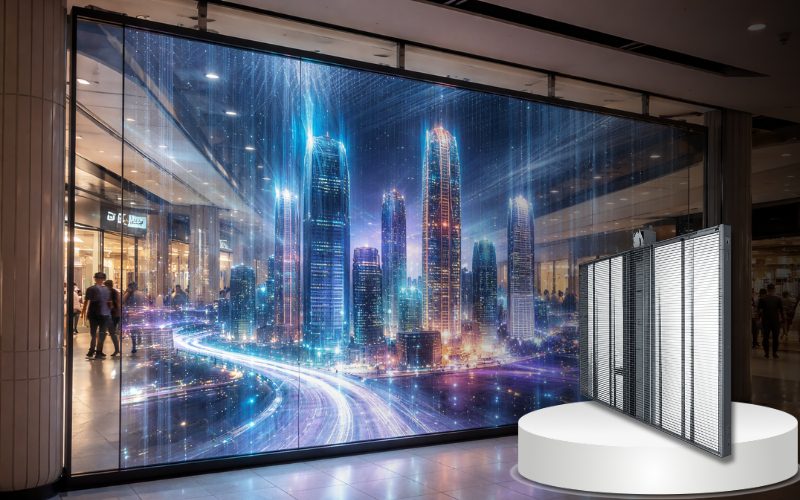
As digital displays continue to evolve, businesses are no longer limited to bulky, opaque screens. The rise of the Transparent LED Screen has transformed how brands communicate visually—especially in retail, advertising, and architectural environments. While traditional LED displays remain widely used, transparent LED technology offers a modern alternative designed for today’s design-driven spaces.
This article compares Transparent LED Screens vs Traditional LED Displays, helping businesses choose the right solution based on application, visibility, design, and performance.
What Is a Transparent LED Screen?
A Transparent LED Screen is a display system designed to show digital content while allowing light and visibility to pass through the screen. Built with a high-transparency structure, these displays integrate seamlessly with glass surfaces such as storefront windows, building facades, and exhibition installations. Unlike conventional LED displays, transparent LED screens do not block views or natural light, making them ideal for modern architectural and commercial environments where aesthetics matter as much as visibility.What Is a Traditional LED Display?
A traditional LED display is a solid-panel screen designed for maximum brightness and uninterrupted visuals. These displays are commonly used in outdoor advertising, stadiums, control rooms, event stages, and indoor video walls where transparency is not required. Traditional LED displays focus on delivering high-resolution content, strong contrast, and durability, making them suitable for both permanent installations and rental-based applications.Key Differences Between Transparent LED Screen and Traditional LED Display
Visibility & Design Integration
A Transparent LED Screen allows viewers to see through the display while digital content is running. This makes it ideal for glass-based installations such as storefronts, malls, and showrooms where maintaining visibility is essential. Traditional LED displays are opaque and fully block what’s behind them. While they provide stronger visual dominance, they are less suitable for spaces that require openness or architectural harmony.Application Use Cases
- Transparent LED Screens are commonly used in: Retail storefront advertising
- Glass facades and windows
- Shopping malls and showrooms
- Creative stage designs and exhibitions
- Traditional LED Displays are typically used in: Outdoor billboards and hoardings
- Stadiums and public venues
- Event stages and concerts
- Indoor control rooms and auditoriums
Brightness & Visual Impact
Traditional LED displays generally offer higher brightness levels, making them more suitable for long-distance viewing and high-sunlight outdoor environments. Transparent LED Screens, while still bright, are optimized for closer viewing distances and environments where content must complement physical surroundings rather than overpower them.Structural Weight & Installation
Transparent LED Screens are lightweight and designed to integrate with glass structures, reducing the need for heavy support frameworks. This makes installation easier in commercial and architectural projects. Traditional LED displays are heavier and require solid mounting structures, especially for large-format installations and outdoor use.Energy Efficiency
Transparent LED technology consumes less power due to its open structure and reduced LED density. This makes Transparent LED Screens a more energy-efficient choice for long-term retail and commercial installations. Traditional LED displays, while efficient in newer models, generally consume more power due to higher brightness output and full-panel construction.Which One Should You Choose?
- Choose a Transparent LED Screen if: You want digital content without blocking visibility
- Your space includes glass walls or storefront windows
- Design aesthetics and architecture matter
- You need modern, premium visual appeal
- Choose a Traditional LED Display if: Maximum brightness and visibility are required
- The screen is viewed from long distances
- The installation is outdoor, large-scale, or event-focused
- Transparency is not necessary