
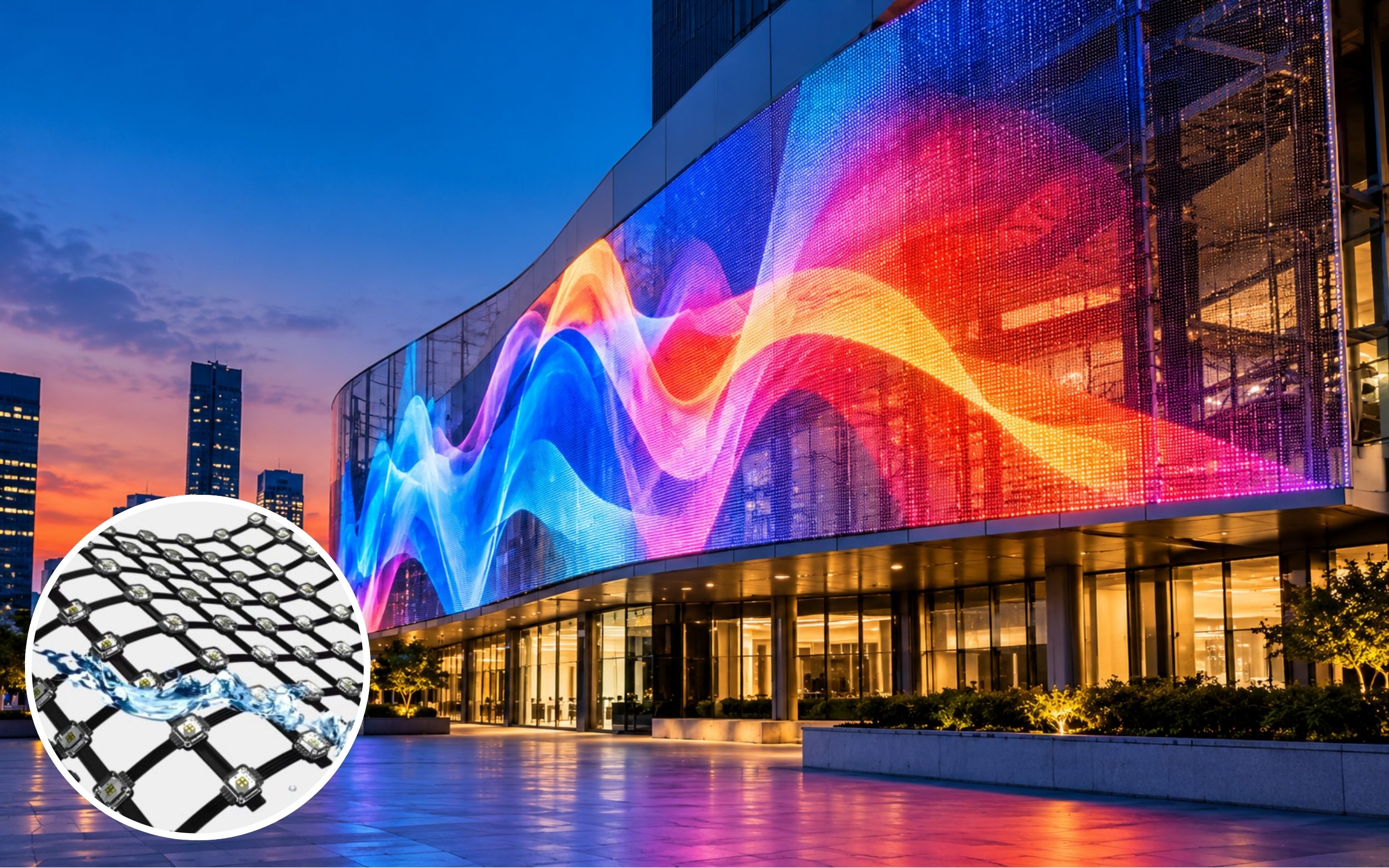
An LED mesh display screen is a digital display solution designed for applications that require large visual surfaces, lightweight construction and, in many designs, a degree of transparency. These displays are used in architectural installations, outdoor advertising, commercial buildings, event venues and other environments where conventional solid LED display panels may not be the most suitable option.
For businesses planning a large-format digital display, understanding LED mesh technology is important when evaluating visibility, installation requirements, structural considerations and visual impact.
Sunrise LED Technology provides LED display solutions for different commercial and outdoor applications. Selecting the appropriate display depends on the project requirements, installation environment, viewing distance and intended content.
What Is an LED Mesh Display Screen?
An LED mesh display screen is a display system made up of LED modules or light-emitting elements arranged in a mesh-like structure. Unlike a conventional LED screen with a relatively continuous panel surface, mesh displays typically incorporate spaces between display elements.
This construction can reduce the amount of material covering the installation area and allow some light and air to pass through, depending on the product design. These characteristics make LED mesh screens suitable for selected building facades, outdoor installations and architectural applications.
An LED mesh display can present videos, animations, graphics, advertisements and other digital content. The appropriate display configuration depends on the required image quality, viewing distance, screen dimensions and environmental conditions.
How Does LED Mesh Display Technology Work?
LED mesh displays use multiple LED elements arranged in a structured configuration to create a large digital viewing surface. The display controller coordinates the LED elements to reproduce images, text, video and animated content.
The spacing between the LED elements is an important part of the design. It influences the display’s resolution, transparency and appearance from different viewing distances.
For example, a large building facade viewed from a considerable distance may have different resolution requirements from a display intended to be viewed by pedestrians at close range.
Before selecting an LED mesh display screen, businesses should evaluate the installation location, intended audience, content type and viewing conditions to determine an appropriate configuration.
Key Features and Benefits of LED Mesh Display Screens
1. Lightweight Mesh Construction
Many LED mesh displays are designed with an open structure that can reduce overall material requirements compared with some conventional solid-panel configurations. The actual weight depends on the product design, cabinet structure and installation system.
For large installations, the complete system weight should be considered during structural planning.
2. Partial Transparency
The spaces between LED elements can allow light and visibility through the display. This characteristic can be useful for selected building facade applications where maintaining some visibility through the installation is important.
The level of transparency varies by product and configuration. It should be confirmed using the manufacturer’s specifications before selecting a display for an architectural project.
3. Large-Format Display Capability
LED mesh screens can be arranged across large installation areas to create digital advertising surfaces and architectural displays.
Their modular construction can support different screen dimensions, subject to the product design, mounting arrangement and structural requirements.
4. Dynamic Digital Content
An LED mesh display screen can show videos, animations, promotional campaigns, branded visuals and other digital content. This gives businesses the flexibility to update their communication without physically replacing printed advertising material.
5. Suitability for Selected Outdoor Applications
Outdoor LED mesh displays may be designed for installation environments exposed to changing weather conditions. However, weather resistance depends on the specific product’s protection rating, materials, installation and operating conditions.
The required environmental protection should be verified before choosing a screen for permanent outdoor use. Businesses can also explore our outdoor LED display solutions for other outdoor display requirements.
LED Mesh Display Screen Applications
Building Facades and Architectural Displays
LED mesh displays can be installed on suitable building facades to create large digital visual surfaces. They can support architectural lighting effects, brand communication and promotional content.
For facade projects, the display must be evaluated alongside the building structure, wind loads, mounting system, maintenance access and local installation requirements.
Outdoor Advertising
An outdoor LED mesh screen can be considered for commercial buildings and advertising locations where a large digital display is required.
Businesses can use the display for product promotions, brand campaigns, video advertisements and scheduled marketing content. The final configuration should account for viewing distance, ambient light and the intended audience.
For digital outdoor advertising applications, explore our DOOH LED display solutions.
Events, Concerts and Stage Installations
Event organisers and production companies may use LED mesh displays for stage backdrops, visual effects and large-format content.
For temporary installations, transportation, installation time, rigging requirements, dismantling and storage should be considered alongside image quality.
Shopping Malls and Commercial Spaces
Suitable LED mesh displays can support digital branding and promotional communication in selected commercial environments.
The screen size, resolution and transparency should be chosen according to the installation area and the distance from which visitors will view the content.
Exhibition and Brand Activation Projects
LED mesh technology can be considered for exhibition structures and promotional installations where the design requires a distinctive visual surface.
The display configuration should match the event layout, content requirements and installation schedule.
LED Mesh Screen vs Traditional LED Display
Both LED mesh screens and conventional LED displays can support digital advertising and visual communication, but their construction and intended applications may differ.
- Construction: LED mesh screens use an open or mesh-like structure, while traditional LED displays generally have a more continuous display surface.
- Transparency: LED mesh screens can offer partial transparency, depending on their design. Traditional displays generally provide limited visibility through the panel.
- Applications: Mesh displays are suitable for selected facades, architectural installations and events. Traditional displays are used for advertising, video walls and indoor or outdoor display applications.
- Resolution: Both display types depend on pixel pitch and configuration for image detail.
- Installation: Both require suitable mounting arrangements, with structural planning based on the product and installation environment.
Neither format is universally better. The right choice depends on the installation environment, desired visual effect, content, budget and technical requirements.
Transparent LED Mesh Screen: What Should You Know?
A transparent LED mesh screen is designed to combine digital visual content with some degree of visibility through the display structure.
This can be useful for architectural applications where covering the entire surface with a conventional display panel may not be desirable.
When evaluating a transparent LED mesh screen, consider:
- The required level of transparency.
- The viewing distance and expected image detail.
- Daylight visibility and brightness.
- The appearance of the display from both sides, where relevant.
- The building structure and mounting requirements.
- Environmental protection for outdoor installations.
- Access for maintenance and component replacement.
Transparency, resolution and brightness can involve design trade-offs. The best configuration should be selected according to the project’s priorities rather than assuming that every transparent mesh display provides the same performance.
Factors to Consider When Choosing an LED Mesh Display Screen
Pixel Pitch and Viewing Distance
Pixel pitch affects the spacing between LED pixels and the level of visible image detail. The required pixel pitch should be selected according to the distance between the screen and its intended audience.
A display viewed from a long distance may have different requirements from one positioned close to pedestrians.
Brightness and Ambient Lighting
Brightness requirements depend on the installation environment, surrounding light and viewing direction. Outdoor installations exposed to direct sunlight require particular attention to visibility.
The manufacturer’s brightness specifications should be checked for the exact display configuration being considered.
Transparency and Visual Requirements
If the installation requires visibility through the screen, compare the transparency characteristics of the available products. The selected design should balance transparency with image quality and the intended viewing experience.
Screen Dimensions and Structural Support
Large-format installations require careful planning of the display dimensions, mounting structure, wind exposure and total installed weight.
Building facade projects should be assessed by appropriately qualified structural professionals before installation.
Weather Protection
For outdoor applications, review the product’s ingress protection rating and operating temperature specifications. Also consider rain exposure, dust, humidity, drainage and the installation’s maintenance requirements.
Content and Control System
Confirm that the display and control system support the intended content formats, resolution and playback requirements. For advertising networks, determine whether scheduled or remote content management is required.
Installation and Maintenance Considerations
Proper installation planning is important for the performance and serviceability of an LED mesh display screen.
Before installation, assess the mounting arrangement, electrical requirements, cable routing, access for maintenance and environmental exposure. For temporary event applications, transportation, assembly procedures and safe dismantling should also be planned.
Routine maintenance requirements vary by product. Depending on the design, servicing may involve inspecting modules, checking electrical connections, cleaning components and replacing faulty parts.
Following the manufacturer’s installation and maintenance instructions helps support safe operation and reliable performance.
How to Choose the Right LED Mesh Display for Your Project
Before selecting an LED mesh display screen, define the intended application and technical requirements.
- Identify the application: Determine whether the screen is intended for a building facade, outdoor advertising, an event, an exhibition or another installation.
- Assess viewing distance: Establish where the audience will be positioned and how much image detail is required.
- Determine transparency requirements: Decide whether visibility through the display is an important part of the design.
- Review environmental conditions: Consider sunlight, rain, dust, temperature and other site-specific factors.
- Confirm installation requirements: Evaluate the supporting structure, mounting method, electrical supply and maintenance access.
- Establish content requirements: Define whether the screen will display advertisements, videos, animations, text or a combination of formats.
- Compare complete project costs: Consider the display, supporting structure, installation, control system, maintenance and expected operating requirements.
A clearly defined project specification helps the supplier recommend a display configuration suited to the actual installation.
Why Choose Sunrise LED Technology?
Sunrise LED Technology provides LED display solutions for commercial, advertising and outdoor visual communication applications.
For projects considering an LED mesh display screen, the appropriate solution should be evaluated according to the intended application, screen dimensions, viewing distance, environmental conditions and installation requirements.
Discussing these details with the supplier helps establish which display configuration is suitable for the project. Visit Sunrise LED Technology’s LED display screen manufacturer page to explore its display solutions.