
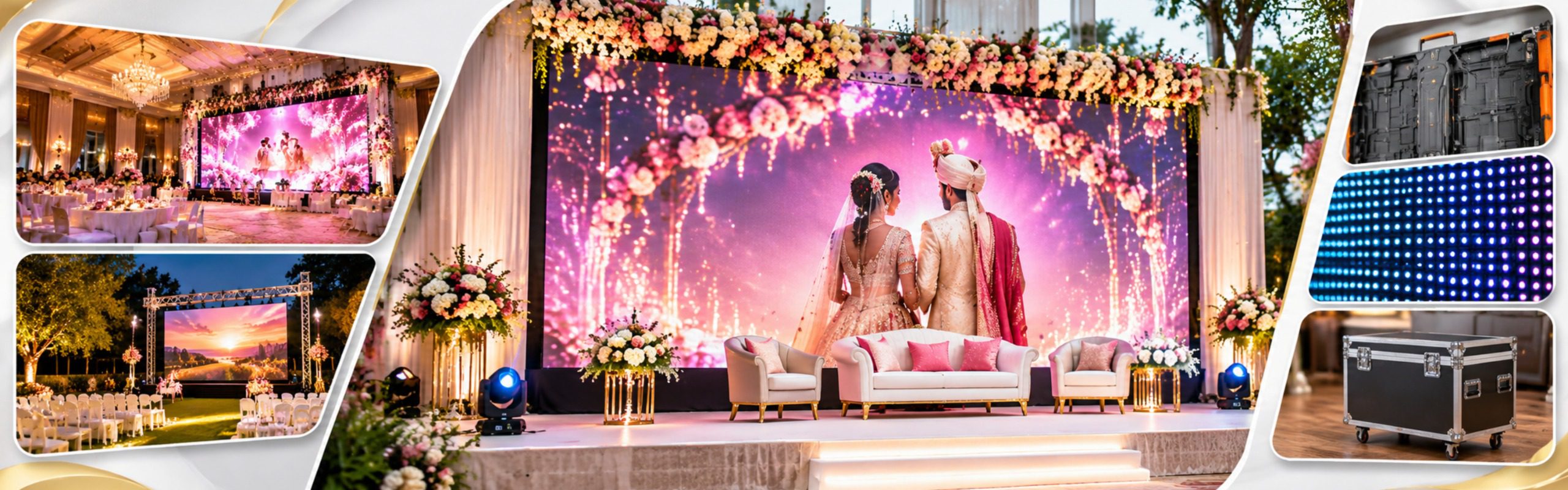
Weddings are no longer limited to traditional stage decorations and printed backdrops. Modern wedding celebrations increasingly use digital displays to create engaging visual experiences, showcase memorable moments and enhance stage presentations. From displaying pre-wedding photographs to broadcasting live camera feeds, an LED screen for wedding functions can become an important part of the overall event setup.
Whether it is a grand wedding reception, a sangeet ceremony, an engagement celebration or an outdoor wedding, the right LED display helps present visual content to guests across the venue. However, selecting a suitable screen requires more than deciding its size. Factors such as venue dimensions, viewing distance, pixel pitch, brightness, screen placement and installation requirements all influence the final display experience.
For wedding planners, event organisers and families arranging a celebration, understanding these factors makes it easier to choose an LED screen that complements the venue and event requirements.
Why Are LED Screens Becoming Popular at Weddings?
LED screens have become an important part of modern wedding production because they allow organisers to combine entertainment, decoration and visual communication within the event space.
Unlike static backdrops, digital displays can present different types of content throughout the celebration. The visuals can be changed according to the ceremony, performance or programme schedule.
Some common reasons to use an LED screen for wedding celebrations include:
- Live video display: Show live camera footage of the couple, stage performances and important ceremonies to guests across the venue.
- Pre-wedding videos: Display couple photographs, engagement videos, childhood memories and personalised presentations.
- Stage decoration: Use digital backgrounds, animations and customised wedding visuals to complement the stage design.
- Guest engagement: Display welcome messages, event schedules, photographs and personalised content.
- Entertainment: Support dance performances, musical programmes and sangeet celebrations with coordinated visual effects.
The flexibility of LED displays makes them suitable for different wedding formats, from intimate indoor functions to large outdoor celebrations.
Different Types of LED Screens for Wedding Functions
The type of LED screen selected should depend on the venue, event format, audience size and intended visual presentation. Different display configurations are suitable for different wedding requirements.
1. Indoor LED Screen for Wedding Receptions
Indoor LED screens are commonly used in banquet halls, hotels, convention centres and other enclosed wedding venues. They can be installed behind the wedding stage, alongside decorative structures or at strategic locations within the venue.
An indoor LED display can be used for:
- Wedding stage backdrops.
- Live camera feeds.
- Couple photographs and videos.
- Reception presentations.
- Sangeet performances.
- Personalised wedding animations.
When selecting an indoor LED screen, pixel pitch and viewing distance are particularly important. Guests seated near the stage should be able to view the displayed content comfortably, so the screen resolution must suit the venue layout.
Explore indoor LED display solutions for applications that require indoor visual displays.
2. Outdoor LED Screen for Wedding Events
Outdoor weddings often take place in open lawns, resorts, gardens and destination wedding venues. In these environments, an outdoor LED screen can help guests view stage content, live footage and presentations from different areas of the venue.
Outdoor LED screens are generally selected according to:
- Ambient daylight and lighting conditions.
- Distance between the display and audience.
- Screen dimensions and installation height.
- Environmental protection requirements.
- Supporting structure and mounting arrangement.
For daytime celebrations, visibility under ambient sunlight is an important consideration. For evening functions, the display should be configured to provide comfortable viewing without overpowering the surrounding stage lighting.
The installation should also account for weather exposure, electrical safety and secure structural support.
Explore outdoor LED display solutions for different outdoor installation requirements.
3. Rental LED Screens for Wedding Functions
Rental LED screens are a practical option for temporary wedding installations. They are commonly used by event production companies, wedding planners and decorators who organise multiple functions at different venues.
Rental displays can be assembled according to the stage dimensions and event layout, then dismantled after the function.
They may be suitable for:
- Wedding receptions.
- Sangeet nights.
- Engagement ceremonies.
- Mehendi and other celebrations.
- Destination weddings.
- Large family gatherings.
When choosing a rental LED screen, consider cabinet design, transportation, installation time, rigging arrangements, dismantling and technical support during the event.
The screen configuration should also match the venue’s indoor or outdoor conditions.
How to Select the Right LED Screen Size for a Wedding?
Screen size is one of the most important decisions when planning a wedding LED display. A screen that is too small may not provide sufficient visibility for guests seated farther away, while an oversized display may not suit the stage design or venue proportions.
Before finalising the screen dimensions, consider the following factors.
Venue Dimensions
The width and height of the venue help determine the suitable display size. A banquet hall, outdoor lawn and large wedding convention space may each require a different screen configuration.
The screen should complement the stage design without obstructing important decorative elements, lighting arrangements or guest movement.
Audience Capacity
Consider the total number of guests and how they will be positioned around the stage. If the audience is spread across a large area, the display may need to be larger or supplemented with additional screens.
Viewing Distance
Guests seated close to the screen and those positioned at the back of the venue will experience the display differently. Screen dimensions and pixel pitch should be selected according to the expected viewing distances.
Stage Design
The LED screen should work with the stage backdrop, floral arrangements, lighting and other decorative elements. A properly planned arrangement helps maintain a balanced visual appearance.
There is no single screen size suitable for every wedding. The final dimensions should be determined after reviewing the venue layout and event requirements.
Understanding Pixel Pitch for Wedding LED Displays
Pixel pitch refers to the distance between the centres of two adjacent LED pixels, generally measured in millimetres. It is an important specification when choosing an LED screen for wedding applications because it affects image detail and the suitable viewing distance.
A smaller pixel pitch provides higher pixel density and can be useful when guests are positioned close to the display. A larger pixel pitch may be suitable for certain large-format screens viewed from greater distances.
For example, a wedding stage in a compact banquet hall may require a different pixel pitch from a large outdoor wedding setup where guests are seated farther away.
When comparing LED display options, consider:
- The closest expected viewing distance.
- The farthest audience viewing position.
- Screen dimensions and resolution.
- Type of content being displayed.
- Available display configurations.
Selecting pixel pitch according to the venue helps create a more appropriate viewing experience.
What Content Can Be Displayed on a Wedding LED Screen?
One of the biggest advantages of using an LED screen for wedding functions is the flexibility to display different types of visual content throughout the event.
Couple Photographs and Pre-Wedding Videos
Couple photographs, engagement highlights and pre-wedding videos can be displayed during the reception or other wedding ceremonies. These visuals help personalise the event and make the display part of the celebration.
Live Camera Feeds
Live camera feeds allow guests to watch important moments happening on the stage. This can be especially useful in large venues where some guests may be seated at a considerable distance from the main stage.
Sangeet and Dance Performance Visuals
Sangeet performances can incorporate customised backgrounds, animations and coordinated visual content. The display can complement music and choreography while supporting the overall stage presentation.
Wedding Welcome Messages
Personalised welcome messages, couple names, ceremony schedules and event information can be displayed to create a coordinated visual experience for guests.
Customised Digital Stage Backgrounds
LED screens can display decorative graphics, themed animations and personalised backgrounds that match the wedding’s colour scheme and stage design.
For smooth playback, the event organiser should prepare the content in advance and confirm the required video formats, resolution, aspect ratio and playback system with the LED display team.
LED Screen Setup Ideas for Different Wedding Functions
Different wedding ceremonies have different visual requirements. The display arrangement should be planned according to the purpose of each function.
Wedding Reception
A reception LED screen is often installed behind or around the main stage. It can display the couple’s photographs, welcome animations, live footage and customised visual backgrounds.
Sangeet Ceremony
Sangeet functions involve dance performances and music. LED displays can be used to present coordinated backgrounds, performance visuals and event-related videos.
Engagement Ceremony
For engagement celebrations, LED screens can display couple introductions, photographs, personalised messages and live camera footage.
Mehendi and Haldi Functions
Depending on the venue and event design, LED displays can present colourful graphics, photographs, animations and event-related information.
Destination Weddings
Destination weddings may take place at resorts, outdoor lawns and open-air venues. The LED screen setup should be planned around the location, weather conditions, power availability, viewing distance and stage arrangement.
Important Factors to Check Before Booking a Wedding LED Screen
Before confirming an LED display for a wedding, organisers should review the technical and operational requirements rather than selecting a screen based only on its appearance.
1. Screen Quality and Resolution
Ask about the display’s pixel pitch and resolution. These specifications should be suitable for the venue dimensions and audience viewing distance.
2. Brightness Requirements
Indoor and outdoor venues have different lighting conditions. Confirm that the proposed display configuration provides suitable visibility for the event environment.
3. Installation and Mounting
Check how the display will be mounted, whether it requires a supporting structure and how much setup time is needed. For suspended installations, suitable rigging and structural assessments are important.
4. Content Playback and Connectivity
Confirm how videos, photographs and live camera feeds will be connected to the display. Discuss playback equipment, input connections, content formats and any requirements for live video integration.
5. Technical Support During the Event
A wedding programme may involve several scheduled performances and presentations. Confirm who will operate the display, manage content changes and assist if a technical issue occurs.
6. Power and Electrical Arrangements
Check the electrical supply requirements and power arrangements at the venue. Cable routing and electrical connections should be planned to maintain a safe event environment.
7. Complete Project Cost
Compare quotations based on the complete setup rather than the screen alone. Consider display dimensions, rental duration, transportation, installation, dismantling, supporting structures, content playback and technical support.
Indoor vs Outdoor LED Screens for Weddings: Which Should You Choose?
The choice between indoor and outdoor LED screens depends primarily on the venue and environmental conditions.
Indoor LED screens are generally suitable for banquet halls, hotels, convention centres and enclosed reception venues. Their specifications should be selected according to viewing distance, pixel pitch and indoor lighting.
Outdoor LED screens are considered for open lawns, gardens, resorts and other external venues. Their configuration should account for ambient light, weather exposure, environmental protection and secure mounting.
Neither option is automatically better. The right display depends on where the wedding is taking place and how the screen will be used.
Why Choose the Right LED Display Partner for Your Wedding?
A successful wedding display setup involves more than supplying LED panels. It requires an understanding of the venue, stage design, audience arrangement, content requirements and installation conditions.
Sunrise LED Technology provides LED display solutions for different indoor, outdoor, commercial and event applications. Its range includes display technologies that can be evaluated according to the requirements of wedding receptions, stage presentations and other celebrations.
When discussing a wedding LED screen requirement, organisers should share the venue dimensions, event location, screen size, expected viewing distance, installation schedule and type of content to be displayed.
This information helps determine a suitable display configuration for the event.
Plan Your Wedding LED Screen Setup with Sunrise LED Technology
Whether you are organising a wedding reception, a sangeet ceremony, an engagement celebration or a destination wedding, choosing the right LED display can help create a more engaging visual experience for guests.
From indoor stage displays to outdoor event screens, the right configuration depends on the venue, audience size, viewing distance and content requirements.
Explore the LED display solutions from Sunrise LED Technology to discuss your project requirements and identify a suitable display option for your wedding celebration.
Frequently Asked Questions About LED Screens for Weddings
The best LED screen depends on the venue, audience size, viewing distance and event requirements. Indoor LED screens are suitable for banquet halls and reception venues, while outdoor LED screens are considered for open lawns, gardens and outdoor celebrations.
Yes. LED screens can be installed behind or around wedding stages to display photographs, animations, personalised graphics, live camera feeds and decorative visual content.
The required screen size depends on the venue dimensions, stage layout, audience capacity and viewing distance. A display should be selected after assessing the event space and audience arrangement.
Yes. LED displays can show live camera feeds when connected to a compatible video source and playback system. The camera, video processor and display connections should be checked before the event.
Yes. Rental LED screens are commonly used for temporary wedding installations, including receptions, sangeet ceremonies, engagement events and destination weddings. They can be assembled and dismantled according to the event schedule.
Indoor wedding LED screens are designed for controlled indoor environments, while outdoor displays need suitable brightness and environmental protection for external conditions. The selection should match the venue and installation requirements.
LED screens can display customised photographs, animations, couple names, welcome messages and digital backgrounds. The content should be prepared in compatible formats and coordinated with the event’s stage design.
Check pixel pitch, resolution, brightness, screen dimensions, viewing distance, installation arrangements, power requirements, content playback compatibility and technical support during the event.
Yes, suitable outdoor LED display configurations can be considered for destination weddings. The installation should account for weather exposure, ambient lighting, electrical supply, mounting arrangements and site conditions.